Clean, safe, high-quality water shouldn't be a luxury in your own home. It's what Rose City Water Filtration is built around. We treat everything from hard water and contaminants to unpleasant tastes and odors, with solutions customized for both city water and private wells.
Every home's water is different. Even two houses on the same street can test differently depending on plumbing, source, and whether they're on city water or a well. That's why we never quote a system over the phone. On utility water in Tyler and Whitehouse the usual complaints are hardness and chlorine taste; out in the well country around Arp and Troup, the same house adds iron and sediment to the list. We kick things off with a full water analysis at your tap to pinpoint what's actually going on, whether that's hardness, sediment, chlorine taste, or something that needs closer attention. From there, we recommend the treatment approach that fits, and only what your water actually needs.
Problems we fix in Tyler-area homes
Hard water & scale: white crust on faucets and showerheads, spotted dishes, soap that won't lather, dry skin and hair, and shortened water-heater life.
Bad taste & odor: chlorine, metallic, or "earthy" tastes that make tap water unpleasant to drink or cook with.
Staining: orange-brown iron stains on sinks, tubs, and laundry (especially common on wells).
Cloudy or sandy water: sediment and turbidity that wear on fixtures and appliances.
Water softeners
A properly sized water softener removes the dissolved calcium and magnesium that make water "hard." The payoff shows up everywhere: no more scale on fixtures, cleaner dishes straight out of the dishwasher, softer skin and hair, brighter laundry, and appliances, especially your water heater, that last longer and run more efficiently. We size the system to your household's actual usage and your measured hardness level, so it regenerates efficiently instead of wasting salt and water.
Whole-house filtration
Filtration handles what a softener doesn't: sediment, chlorine taste and odor, and other contaminants. A whole-house system treats water at the point it enters your home, so every tap, shower, and appliance gets the benefit, not just the kitchen sink. Where your test calls for it, we combine softening and filtration into one treatment train, striking the right balance between thorough treatment and preserving the water quality your home should keep.
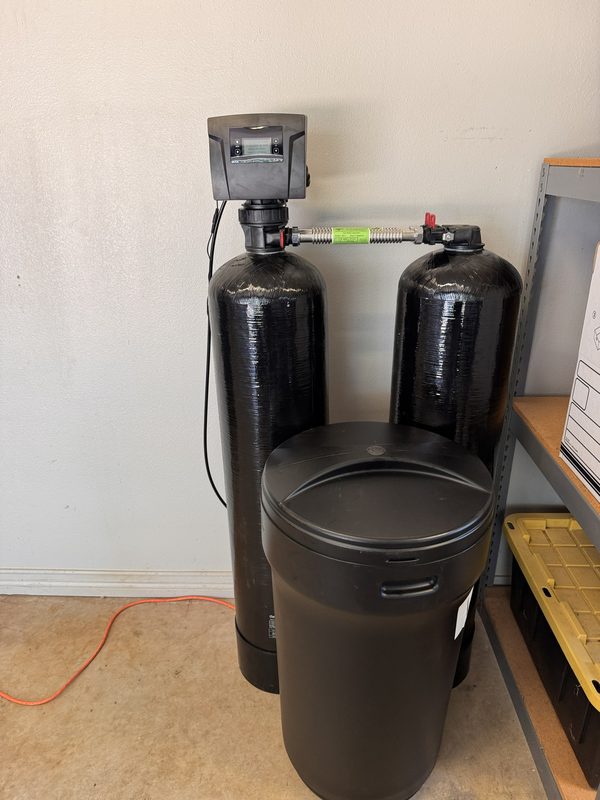
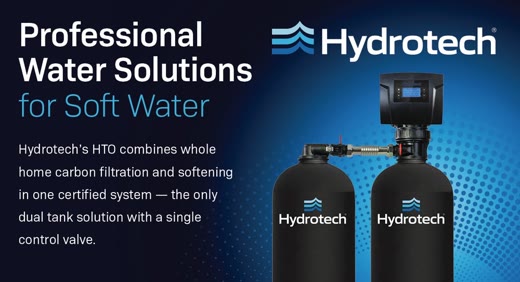
A combination system we install: a water softener paired with a whole-house carbon filter that clears chlorine, taste, and other contaminants at every tap.Equipment we sell and install: the Hydrotech HTO combines whole-home carbon filtration and softening in one certified dual-tank system, run by a single control valve.
Want purified drinking water specifically, for the tap you actually fill glasses from? That's usually a reverse-osmosis system at the kitchen sink. See Drinking Water Purification.
How it works
1 · Free water testWe test your water on-site, at your tap, and walk you through the results in plain English. No cost, no obligation.
2 · Custom recommendationWe recommend a system matched to your water, your home's size, and your budget: never a one-size-fits-all package.
3 · Install & supportProfessional installation, then ongoing local maintenance and support whenever you need it.
Why homeowners choose Rose City
We're family-owned and local to Smith County, the Tyler-area home of the Palestine Water Treatment family, with 35+ years of East Texas water expertise behind us. When you call, you talk to a local tech, not a call center. And because we start every job with a real water test, you'll never be sold equipment your water doesn't need.
Frequently asked questions
Do I need a water softener in Tyler, TX?
If you're seeing white scale on faucets, spots on dishes, soap that won't lather, or dealing with dry skin and dull laundry, those are the classic signs of hard water, and they're common across Tyler and Smith County, on both city water and private wells. A softener removes the dissolved calcium and magnesium behind all of those problems at once, protecting your water heater and appliances too. The only way to know for sure is to measure your actual hardness, which is exactly what our free on-site test does. We show you the number and tell you honestly whether a softener is worth it for your home.
What's the difference between a water softener and a whole-house filter?
They solve different problems, and some homes need both. A softener specifically removes hardness minerals. It stops scale, spotting, and dry skin, but doesn't remove chlorine taste or sediment. Whole-house filtration does the opposite: it cleans up taste, odor, and sediment at every tap, but doesn't soften. When your test shows both issues, we'll often recommend a combination system sized to your home's actual usage.
Will a treatment system work if I'm on a private well?
Yes, but well water usually needs a different treatment train than city water. East Texas wells commonly carry iron, sulfur odor, sediment, and sometimes bacteria on top of hardness, so we test for those specifically and build the system around what's actually in your water. See our well water treatment page for the full picture.
How long does installation take, and what maintenance is involved?
Most residential installs are completed in a single visit. After that, softeners mainly need salt added on a regular schedule, and filtration systems need periodic media or cartridge changes. We service everything we install and we'll set you up with a simple maintenance schedule so the system keeps performing like day one.
How much does whole-home water treatment cost?
Whole-home treatment systems, water softeners included, start at $3,250 installed. The exact number depends on your test results and household size. Annual maintenance visits start at $175 plus parts, and the on-site water test that sizes it all is free.
"Danny took extra time and effort to figure our complicated water system… Our water is amazingly clean now. Definitely recommend!!!"
VCValerie C.New treatment system
★★★★★
"We have all been enjoying knowing our water is filtered clean, tastes great and the best part...showers leave our hair and skin soft without the harshness of county water. Wish we had done it years ago. Highly recommend."
EFElizabeth F.Home water filtration
★★★★★
"I couldn’t be happier with Daniel and the work he did for us! He was on time, professional, and our water system rocks! I’d highly recommend these guys!!"
LSLucas S.Water system install
Find out exactly what's in your water
Schedule your free on-site water test. We'll show you what's coming out of your tap and exactly how to fix it. No pressure, ever.
 Rose City Water Filtration